Schedule Your Consultation
with Dr. Prasad Today





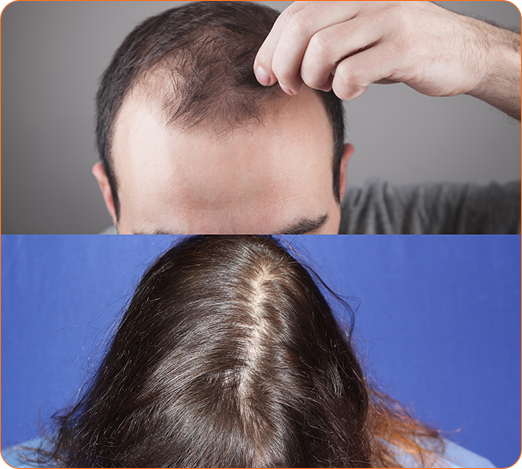
Major Cause of Hair Thinning in Men
Major Cause of Hair Thinning
in Men
The most common cause of hair loss in men is genetic pattern hair loss, or androgenetic alopecia, also called androgenic alopecia, which is a genetic cause. Scalp sensitivity to the hormonedihydrotestosterone (DHT) is a major factor in male pattern hair loss. Genetic hair loss is commonly called pattern hair loss, and is medically referred to as androgenic alopecia. Genetic pattern hair loss makes up 95% of hair loss cases in men.
.png)
Scalp DHT-sensitivity is a major factor of male pattern hair loss/ androgenetic alopecia.
Most Common Cause of Hair Loss in Men – Genetics and Hormones
Most Common Cause
of Hair Loss in Men –
Genetics and Hormones
Dihydrotestosterone
Dihydrotestosterone is created when the hormone testosterone interacts with the enzyme 5-alpha reductase. While testosterone is commonly associated as a male hormone, it is also present in women in significantly lower amounts. In men, DHT-sensitivity is associated with hair thinning that leads to eventual hair loss.
.png)
Hair grows in a cycle
.png)
Growth-shed-rest-repeat cycle. In men, DHT-sensitive hair follicles grow back progressively thinner hairs in each cycle. In women, the cause of hair thinning remains undetermined, but evidence suggests possible roles involving DHT and inflammation which may contribute to progressive hair thinning.
Susceptibility
All men have a significant level of dihydrotestosterone in their bloodstream, but not every man has a significant scalp sensitivity to DHT, and men with DHT-scalp sensitivity have a varying range. Men with acute DHT-sensitivity may manifest hair thinning in their late teens to their early 20s, with an aggressive pattern and rapid rate of hair thinning. In comparison, a man with less acute DHT-sensitivity may start to notice hair thinning in his 40s, with less rapid rate of thinning, and a less aggressive pattern. Men with little to no DHT-sensitivity may barely notice hair thinning throughout their lifetime.
.png)
DHT- Sensitivity is Not the Only Factor in Male Pattern Baldness
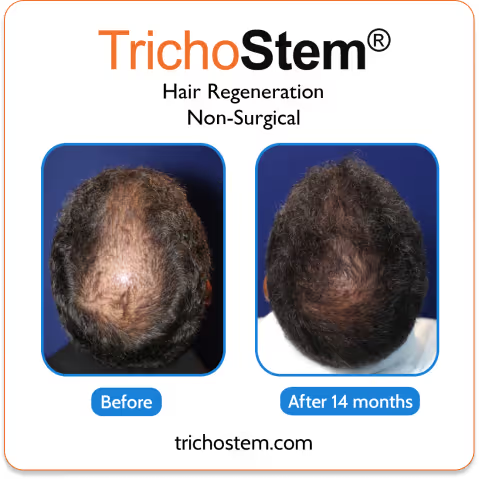
DHT-sensitivity is a major factor of pattern hair loss in men, but not the only factor. This is proven with prescription DHT-blockers that do not stop hair thinning, but rather slows down the rate of hair thinning in most men. A DHT-blocker also have a limited effect on thickening thinning hair. A DHT-blocker works by inhibiting the enzyme 5-alpha reductase to stop testosterone from being converted into dihdyrotesosterone. With the TrichoStem® Hair Regeneration treatment, we have thickened thinning hair, and provided more scalp coverage for men who’ve already been on a DHT-blocker for years.
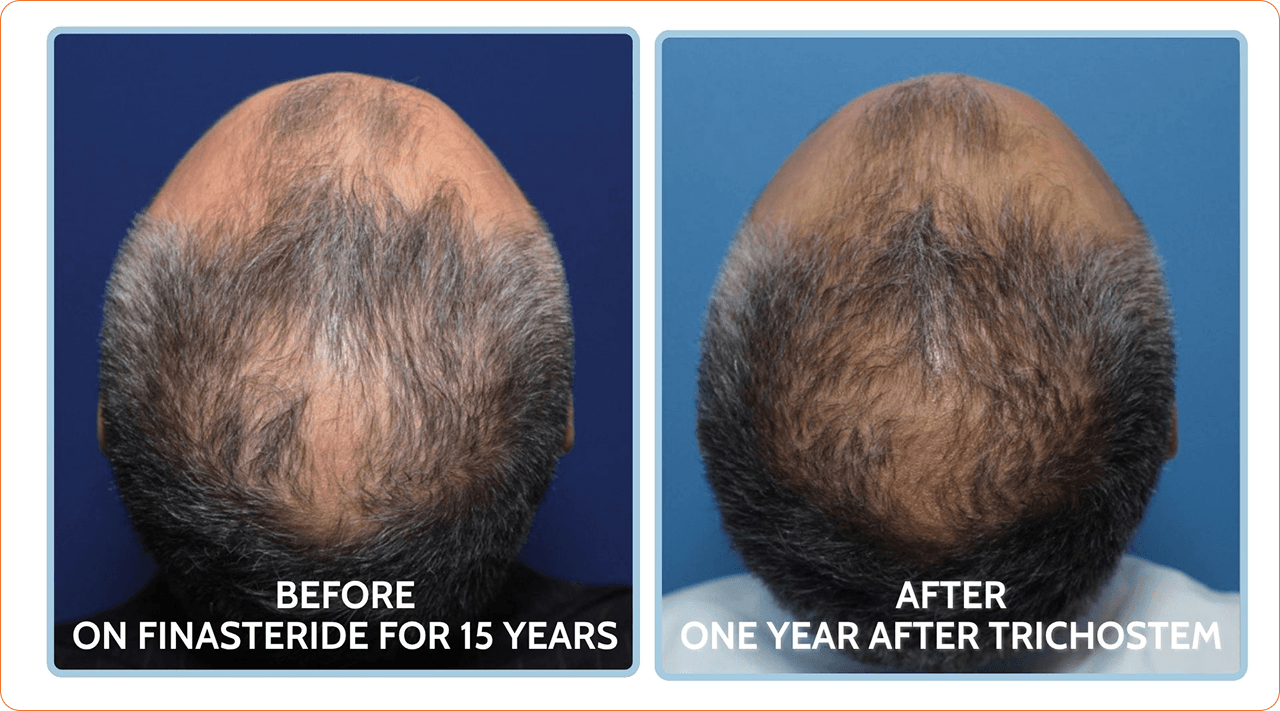
TrichoStem® Hair Regeneration increased hair thickness, and scalp coverage for a male patient who was already on a DHT-blocker for 15 years prior to the injection treatment
.png)
TrichoStem® Hair Regeneration can still thicken thinning hair in men who choose not to take a DHT-blocker, but this is not recommended as results may not be optimal, and benefits may not last as long.
.png)
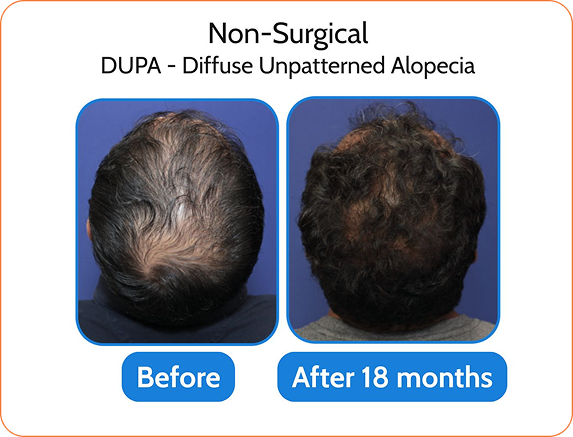
Diffuse unpatterned alopecia (DUPA) exhibits progressive hair thinning similar to pattern hair loss. However, unlike pattern hair loss, DUPA affects the permanent zones at the lower back and sides of the head, which are typically resistant to thinning.
.png)
Female pattern hair loss, characterized by diffuse thinning across the top of the scalp, is the most prevalent cause of hair loss in women. However, women also face a wider range of potential causes for hair thinning compared to men.
Female pattern hair loss mainly differs from male pattern hair loss in that it affects the whole top of the scalp with diffuse hair thinning, including the crown. Androgenetic alopecia in women can also be noticed with the hair part becoming progressively wider, often described as a Christmas tree pattern. In comparison, male pattern hair loss usually starts with a gradually receding hairline, and a widening of the crown.
.png)
Hormonal Factors in Female Pattern Hair Loss
Hormonal Factors in
Female Pattern Hair Loss
Female Pattern Hair Loss
.png)
While male pattern hair loss has DHT-sensitivity as a major cause of hair thinning, the hormonal factors contributing to female pattern hair loss is not quite as clear to science. While women naturally have male hormones like testosterone, and dihydrotestosterone (DHT), these hormones are not present in significant levels, even when elevated. The decrease in estrogen level during menopause does have an impact on hair thickness. This is seen in the increase of women affected by female pattern hair loss after age 50, and the benefits of estrogen supplementation on hair thickness in menopausal women.
Treating Female Pattern Hair Loss
Even if the cause of female pattern hair loss is unknown, treatment with
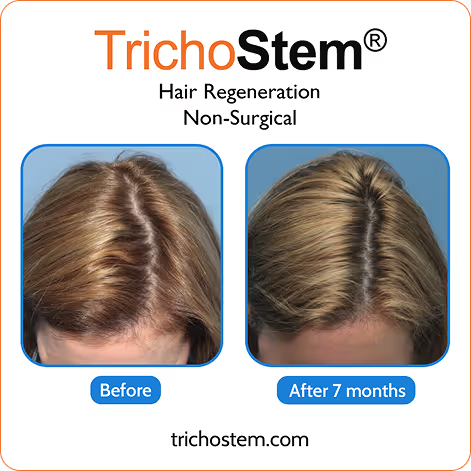
TrichoStem® Hair Regeneration can be easier for women than it is for men. In the recent past, women had limited options to treat pattern hair loss and in some cases the testosterone-blocker spironolactone, both of which have limited effectiveness, if any at all. For women under 50, TrichoStem® Hair Regeneration can be a standalone treatment for female pattern hair loss to thicken thinning hair, and can save and stimulate hair growth from dormant hair follicles that are currently not growing hair due to active miniaturization. With TrichoStem® Hair Regeneration, female pattern hair loss patients who have not entered menopause don’t need to use additional medications or therapies to achieve, and sustain thicker hair growth. However, women with a decline of estrogen in premenopausal to the menopausal age range may see additional benefit in hair thickness and appearance from hormone therapy.
.png)

.png)
Hair thinning in younger women can be due to PCOS/PCOD, but thick hair can be restored with hormone therapy that’s usually oral contraception
.png)
.png)
Menopausal women can have less hair fullness due to the decline in estrogen levels, which can be helped with hormone therapy
Hair Shedding Due to Severe Stress - Telogen Effluvium
Concerns about sudden hair loss can be due to severe stress, which can cause higher than normal hair shedding. Sudden and noticeable hair shedding due to stress is common among men and women, which is called telogen effluvium. Normal hair shedding consists of 50-100 hairs a day, but telogen effluvium can result in shedding up to 300 hairs a day. Severe stress events that can cause telogen effluvium can include a death in the family, relationship stress, financial hardship, or a prolonged illness that puts stress on the body, or stress on the body following major surgery. Higher than normal hair shedding occurs about 2-4months after the severe stress event. Telogen effluvium is a temporary condition that does not require medical treatment for shed hair to grow back. Shed hair should grow back in 3-6 months after the onset of hair shedding.
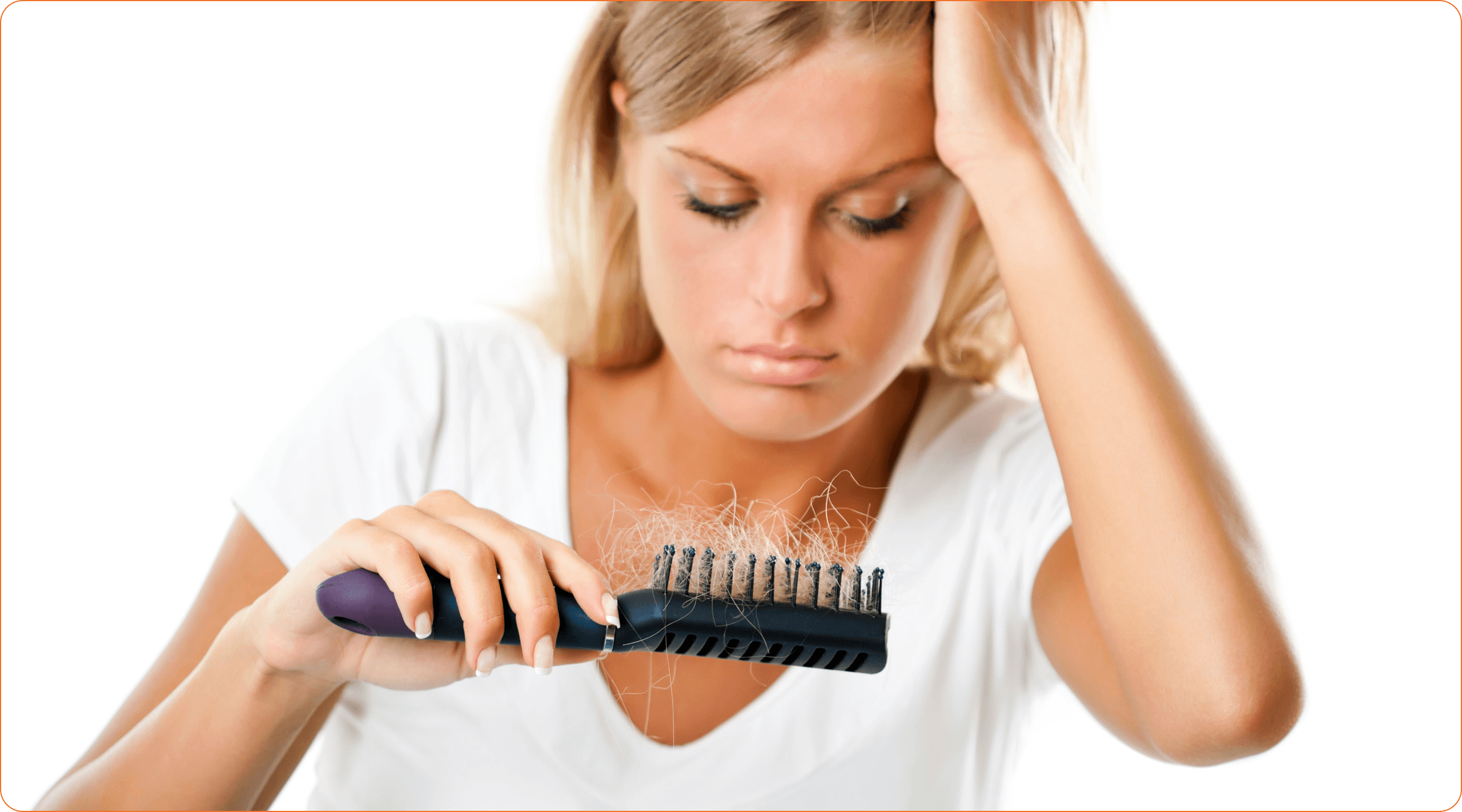
Telogen effluvium is temporary hair shedding caused by severe stress, which doesn’t require medical treatment for shed hair to grow back
Chronic Telogen Effluvium
Chronic telogen effluvium is caused by a hormonal imbalance rather than severe stress, leading to excessive hair shedding. It manifests as higher than normal hair shedding, sometimes in clumps, but without a preceding stress event. The absence of a stress event helps in diagnosing chronic telogen effluvium. Unlike telogen effluvium, chronic telogen effluvium can recur without any obvious cause or trigger. This condition most often affects women aged 30 to 60.
Explore Our Locations





.svg)
.svg)


.avif)


%201.png)



FOLLOW US

.svg)
.svg)
.svg)