Schedule Your Consultation
with Dr. Prasad Today



Hair Loss In Men

Male pattern hair loss is progressive hair thinning
Thinning hair grows in natural density, so if hair is thickened, results can exceed hair transplants
DHT-sensivity is not the only cause of male pattern hair loss

.png)

“I flew from Texas to NYC and it was worth every penny. My hair hasn’t looked this good in over a decade”
– W.0.
Hair Loss In Men
Male pattern hair loss is progressive hair thinning
Thinning hair grows in natural density, so if hair is thickened, results can exceed hair transplants
DHT-sensivity is not the only cause of male pattern hair loss
“I flew from Texas to NYC and it was worth every penny. My hair hasn’t looked this good in over a decade”
– W.0.
Pattern hair loss is more common in men than in women, and more noticeable. Genetic pattern hair loss can affect males as early as their late teens and early 20s. Male pattern hair loss follows the Rule of Decades: 20% of males in their 20s suffer from pattern baldness; in men in their 30s, 30% experience hair loss, and so on.
.png)
Hair thinning on the male frontal hairline

Hair thinning at the crown at the back of the head.
Men usually experience hair loss at the crown (bald spot at the back of the head), front (receding hairline) and top of the scalp. 95% of all male hair loss cases is due to genetic pattern hair loss, which as indicated in the name is caused by genetics, and is referred to medically as androgenetic alopecia, or androgenic alopecia, or pattern baldness
How to Treat
Hair Loss in Men
How to Treat Hair Loss in Men

Hair loss does not happen overnight, rather hairs grow, then shed, then grow again. Hair loss occurs when hair grows back progressively thinner in each cycle, until it becomes so thin that it disappears and stops growing altogether. The treatment makes a significant impact on the hair thinning process instead of hairs growing progressively thinner, hair grows back thicker, even darker.
Since 2011, TrichoStem® Hair Regeneration has proven effective in 99% of male patients who receive the treatment. Experience with a wide variety of male pattern hair loss has led to the development of customized treatment plans based on age of onset, degree of hair loss, rate of hair loss, and other variables determined during consultation.
Major Cause of Hair Thinning in Men
Major Cause of Hair Thinning
in Men
Scalp sensitivity to the hormone dihydrotestosterone (DHT) is a major factor of genetic pattern hair loss in men, but it’s not the only factor. Young men with early onset of pattern hair loss, with an aggressive, rapid hair thinning pattern are the most affected by DHT-sensivity, so a DHT-blocker like is most important for this age group. The TrichoStem® Hair Regeneration treatment may not be as effective, or last as long in young men who refuse to take a DHT-blocker, with a DHT-blocker use as an important part of their treatment plan. Older men with later onset of hair thinning aren’t as DHT-sensitive, but are still prescribed a DHT-blocker for maximum hair loss management. However, many men with later onset of pattern hair loss can thicken their thinning hair, and sustain their results for 3-5 years, or even more even when choosing not to take a DHT-blocker.

TrichoStem® Hair Regeneration is made up primarily of its activator platelet-rich plasma (PRP) that is taken from your own blood prior to the procedure, and ACell’s extracellular matrix as the main ingredient. Both PRP and extracellular matrix are wound healing materials: the platelets of PRP are what heal cuts, ECM uses the regenerative qualities of porcine bladder for advanced reconstructive surgery. Combining these wound healing materials trigger hair at first to shed, then for thinning hair to grow back thicker, and healthier. Hair follicles that have stopped growing hair, but are still viable, can also be saved from full miniaturization so the grow hair again. A second treatment we call the booster can be done 15-24 months after the first to thicken this new fine hair growth. An interesting side effect is that some patients with graying hair have darker hair grow back after the injection treatment.
TrichoStem® Hair Regeneration Versus Other Hair Loss Treatments for Men
Surgical hair transplantation
Surgical hair transplantation on its own does not treat progressive hair thinning, or eventual hair loss, so hair does thin even after transplant surgery. With FUE hair transplants gaining more popularity than FUT hair transplants, FUE does harvest a significant amount of hair grafts from outside the narrow permanent zone of hair genetically resistant to hair thinning. This means that a good number of hair grafts are still prone to the same hair thinning that the grafts are replacing. If hair transplant patients do not receive additional treatment to manage hair thinning, they will need additional hair transplants until their donor area runs out. Safe transplant density is about 20 grafts per cm2, limited by available blood supply for graft healing and survival, and skin integrity, so exceeding this limit can risk loss of all grafts. However, natural hair density is 50-100 hairs per cm2 of scalp, so hair transplants tend to look unnatural because of density. TrichoStem® Hair Regeneration can overcome this limitation because even if hair is thinning, it is still close to natural hair density. Thinning hair is also more numerous than available grafts at the back of the head. Therefore, thickening thinning hair with TrichoStem® Hair Regeneration can provide more scalp surface coverage, and denser hair growth than hair transplants can possibly achieve.
.png)
Native hair, even when thinning, grows more closely together than a surgical hair transplant can technically achieve, and thinning hair is more numerous than potential hair grafts. By thickening native thinning hair, TrichoStem® Hair Regeneration can exceed the hair density, and number of hair grafts than one, or even two hair transplants.
DHT-blocker (Propecia)
.png)
.png)
A DHT-blocker can slow hair thinning in men by blocking DHT-formation, but it has a limited effect on thickening thinning hair. TrichoStem® Hair Regeneration is proven to help men on a DHT-blocker get thicker hair than from a DHT-blocker alone.
A DHT-blocker (Propecia) is a 1mg pill that is taken daily to stop the enzyme 5 alpha reductase from turning testosterone to dihydrotestosterone (DHT) to reduce hair thinning in DHT-sensitive hair follicles. If daily intake of the pill stops, hair will continue to thin at the rate it was prior to use. The rare incidence of sexual side effects (reported in less than 2% of users) of DHT-blocker has discouraged many men to avoid taking this drug.
A DHT-blocker is not approved to be taken by women, and can be especially harmful for women pregnant with a male fetus, risking proper fetal development. Some doctors prescribe a DHT-blocker to women, but Dr. Prasad generally does not as DHT-levels in women are generally low, even when elevated above normal.
TrichoStem® Hair Regeneration is seen to exceed results of a DHT-blocker alone. The role of a DHT-blocker is more to slow and stabilize the hair thinning process in men, with just a slight impact on thickening thinning hair. TrichoStem® Hair Regeneration has consistently shown to thicken thinning hair in men already taking a DHT-blocker for years.
TrichoStem® Hair Regeneration is not a DHT-blocker, therefore is not a replacement or alternative to a DHT-blocker. A DHT-blockers still needed as part of the TrichoStem® Hair Regeneration treatment plan for maximum results, especially for younger men with acute DHT-sensivity, and a rapid thinning pattern.
Growth Cycle Prolonging Medication
A growth cycle prolonging medication is a topic treatment that doesn’t stop hair from thinning, but does extend the active hair growth phase (anagen) and delays the hair shedding phase (telogen) so more hair is present on the head. A growth cycle prolonging medication needs to be applied twice daily. If use is discontinued, the hair growth cycle reverts to its regular timing, and hair looks the same as it did prior to treatment. Many growth cycle prolonging medication users don’t see enough changes in their hair to bother continuing with twice daily application.
.png)
A growth cycle prolonging medication is not sustainable long-term as effects can wane with time, and gains can be lost quickly if not used daily.
Platelet-rich plasma (PRP) injections for hair loss
.png)
Scalp injections of PRP alone require multiple treatment sessions every 1-3 months, with ongoing treatment with no clear end date. Many people don’t see results of PRP alone.
Platelet-rich plasma (PRP) injections for hair loss need regular treatment sessions, usually every 1-3 months initially, with regular treatment sessions after the first year, with no clear end point . While PRP is used in TrichoStem® Hair Regeneration, in our clinical experience, using it alone for hair loss treatment produces minimal, varied, and inconsistent results. PRP scalp injections don’t work on everyone.
TrichoStem® Hair Regeneration is a customized plan
TrichoStem® Hair Regeneration
is a customized plan
is a customized plan
TrichoStem® Hair Regeneration is a customized plan, with regular follow ups to monitor progress every few months. Only 1-2 treatments are needed, separated by 15-24 months between treatments, with benefits lasting 3-5 years. Some patients who had new hair regrowth stimulated by the first treatment have it thickened further with the second treatment. Most TrichoStem® Hair Regeneration patients avoid a hair transplant completely because the density from the injection treatment often exceeds the results of not one, but two hair transplants. The TrichoStem® Hair Regeneration treatment also costs about half of an FUT hair transplant surgery, or about a third of an FUE hair transplant performed in the US. In patients who have completely lost hair in certain parts of the scalp, a hair transplant can be performed with TrichoStem® Hair Regeneration to increase graft survival, thicken surrounding native hair, and stop continued hair loss.
.png)
Make the Move for Thicker Hair
Make the Move
for Thicker Hair
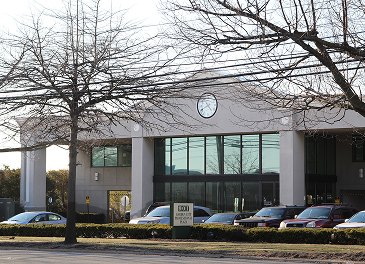
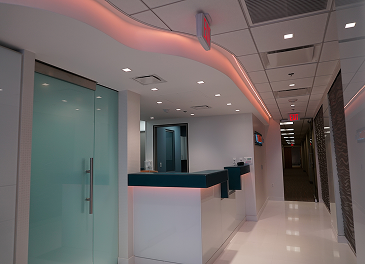
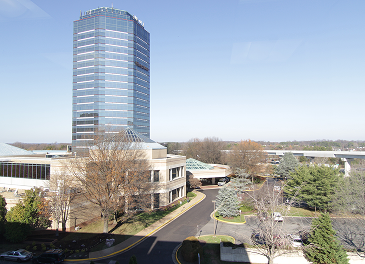
To schedule a consultation submit the form below, or call our Manhattan office at (212) 265-8877, or our Garden City, Long Island office at (516) 742-4636, or our Vienna, Virginia office at (703) 356-1336. Our phones are open 24 hours a day, 7 days a week. Virtual consultations are also available through FaceTime or Zoom. Patient financing options are available for qualified candidates.
Contact Us
Oops! Something went wrong while submitting the form.
Explore Our Locations



.svg)
.svg)


.avif)



%201.png)



FOLLOW US

.svg)
.svg)
.svg)