Schedule Your Consultation
with Dr. Prasad Today



Non-Surgical
Hair Transplant Alternative

TrichoStem® Hair Regeneration offers a non-surgical solution for hair loss.
The vast majority of patients see significant hair growth and avoid transplant surgery.
It is most effective for individuals who don’t have large smooth-bald areas.


.png)
When compared to hair transplant surgery, TrichoStem® Hair Regeneration can achieve greater hair density, more scalp coverage, and can treat progressive hair thinning that even multiple hair transplants can’t do
.png)
Hair transplantation does have limited density due available blood supply for hair graft survival, and numerous grafts would comprise skin integrity
By thickening native thinning hair, and stimulating regrowth from follicles that are still viable, but have stopped growing hair, TrichoStem® Hair Regeneration achieves more natural hair density, and covers scalp than is possible with even multiple hair transplants.
.png)
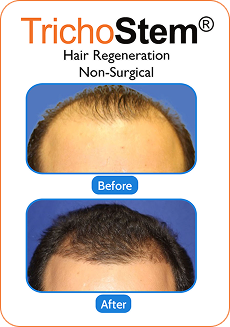
Thickening thinning hair, and stimulating growth from dormant hair follicles can exceed hair transplant density, and coverage.
Six Limitations of Hair Transplant Surgery
Six Limitations of
Hair Transplant Surgery
Hair transplant surgery is not the ultimate solution for genetic pattern hair loss because of these important limitations:
#1 Progressive hair thinning continues after hair transplant
Hair transplant surgery on its own does not treat progressive hair thinning at all, and as hair continues to thin, follicles further miniaturize, until follicles stop growing hair altogether.
.png)
Visible “hair plugs” are from past hair transplants where grafts genetically resistant to hair thinning remain, while native hair, and grafts not resistant to hair thinning are eventually lost.

#2 Hair transplantation cannot match natural hair density
With limited blood supply to support healing of grafts, and skin integrity compromised by incisions of the implanter, safe transplant density is limited to 20 grafts per square centimeter, while natural hair density ranges from 50-100 hairs per square centimeter support hair graft healing, and scalp skin integrity able to withstand only so many incisions made by the implanter.
#3 Available hair grafts can’t match number of hair already lost
Peak hair count in the early teens is about 100,000 hairs. When hair loss is first noticed, about 50% of hair is already lost. About 1500-3000 grafts can be safely harvested for transplant, with each succeeding transplant yielding less grafts. Therefore, even with multiple hair transplant surgeries, the number of hairs lost far exceeds the number grafts available for hair transplant.
.png)
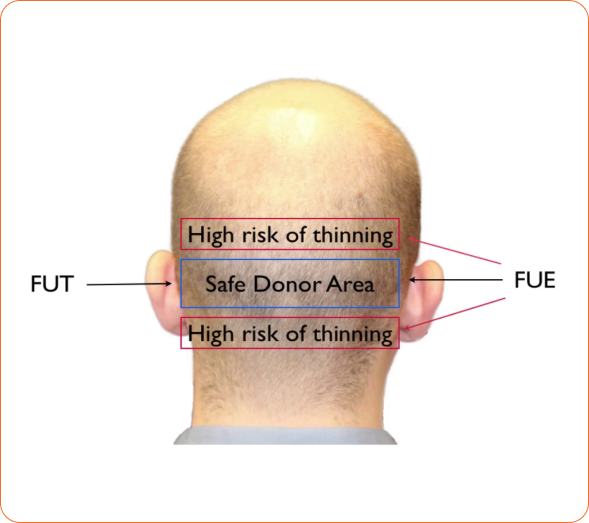
#4 Hair grafts are still
prone to hair thinning
prone to hair thinning
While the FUT (follicular unit transplantation) method only uses the few hair grafts genetically resistant to hair thinning, the FUE (follicular unit extraction) has become the most popular method, since it doesn’t involve excising a strip of skin to harvest grafts. However, with FUE trying to avoid a long strip scar, it harvests grafts from a wider area from the back of the head, including many grafts as prone to hair thinning as the lost hair they are replacing.
#5 Up to 30% of hair grafts are
damaged and lost
damaged and lost
#5 Up to 30% of hair grafts are damaged and lost
Follicular unit extraction (FUE) hair transplants harvest hair grafts individually from the patient using circular punch, or sometimes a robot to extract hair grafts. However, this method of graft extraction is more prone to graft damage, such as cutting or stretching the hair follicle permanently, so it won’t grow hair. Damaged grafts are often still implanted since most surgeons charge based on number of grafts implanted, but hair from damaged grafts won’t grow.

.png)
#6 The trauma of the hair implanter
can cause more hair loss
can cause more hair loss
#6 The trauma of
the hair implanter can
cause more hair loss
the hair implanter can
cause more hair loss
When the sharp implanter places hair grafts too close to existing hair follicles, they can stab through the follicle, causing permanent damage and loss of native hair, which is called collateral loss. This is most often dismissed by hair transplant surgeons, who rationalize that native hair is already thinning, and would be lost eventually.

.png)
.png)

Even if hair is thinning, it vastly outnumbers available hair grafts
Treats Hair Loss Progression
When Transplants Can’t
People with pattern hair loss have progressively thinning hair. Hair transplantation is the process of moving hair from the back, and possibly the sides of the head to areas like the hairline, crown, and mid scalp where hair loss is most noticeable, but hair transplants on their own don’t treat thinning hair at all. Hair transplant techniques like follicular unit extraction (FUE) actually have a significant number of hair grafts that are also prone to hair thinning.
.png)
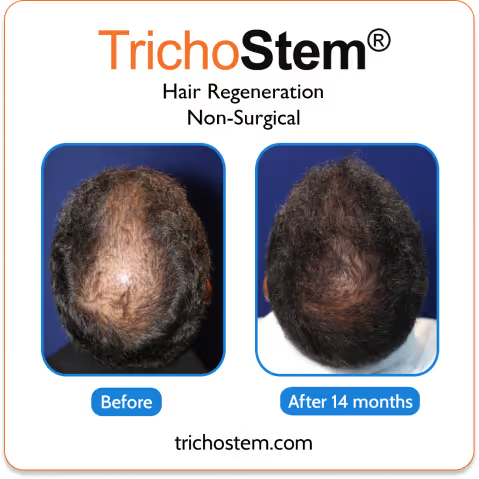
TrichoStem® Hair Regeneration thickens thinning hair in areas prone to hair loss like the hairline, crown, and mid scalp, without surgery. By treating thinning hair, TrichoStem® Hair Regeneration manages hair loss progression more than a surgical transplant, and can even help heal, and thicken transplanted hair grafts.
.png)
Hair loss progresses rapidly in men who have hair transplants in their 20s, leaving little coverage from hair grafts.
.png)
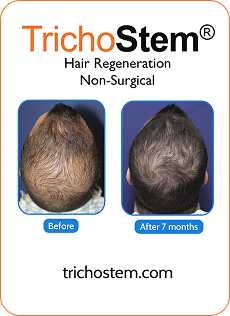
TrichoStem® Hair Regeneration can help young men with early onset, and aggressive hair thinning who are too young for hair transplant surgery.
.png)
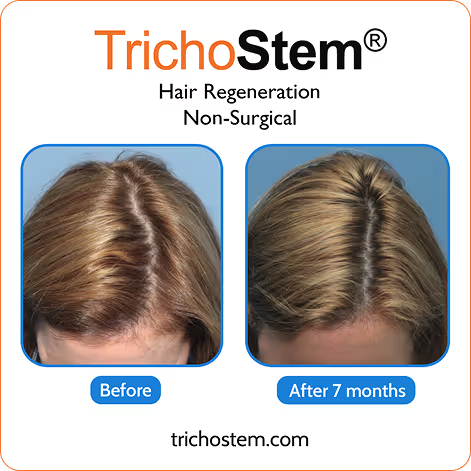
Thinning hair grows closely together in diffuse female pattern hair loss, so the sharp implanter used in hair transplants has a high risk of damaging nearby hair follicles, causing more hair loss
.png)
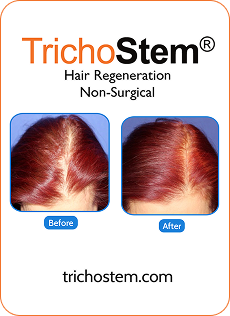
TrichoStem® Hair Regeneration is the most effective option for treating female pattern hair loss, and doesn’t risk damaging nearby hair follicles like a hair transplant would
Contact Us
Oops! Something went wrong while submitting the form.
Explore Our Locations






.svg)
.svg)


.avif)




%201.png)






FOLLOW US

.svg)
.svg)
.svg)