Schedule Your Consultation
with Dr. Prasad Today



TrichoStem® Improves
Hair Transplant Results

Hair transplantation does not treat progressive hair loss
Some hair graft are prone to hair thinning
TrichoStem® Hair Regeneration can thicken thinning native hair, transplanted hair, and help heal hair grafts, as well as the donor area

Why High Graft Counts
Don’t Guarantee Results

.png)
TrichoStem® Hair Regeneration can help thicken thinning hair prior to hair transplant surgery, right after hair transplant surgery to help heal grafts, or improve old hair transplants by saving and thickening native, and transplanted hair
Why High Graft Counts
Don’t Guarantee Results
TrichoStem® Improves
Hair Transplant Results
Hair transplantation does not treat progressive hair loss
Some hair graft are prone to hair thinning
TrichoStem® Hair Regeneration can thicken thinning native hair, transplanted hair, and help heal hair grafts, as well as the donor area
Why High Graft Counts
Don’t Guarantee Results
Some hair transplant practices claim they can harvest 4000 or more grafts, and place 50-100 grafts per square centimeter, which technically can be done. However, those numbers don't mean much in final results as they don't survive. Transplanting this many grafts are known as "mega sessions" and can result in up to 90% of grafts not surviving past the short-term.
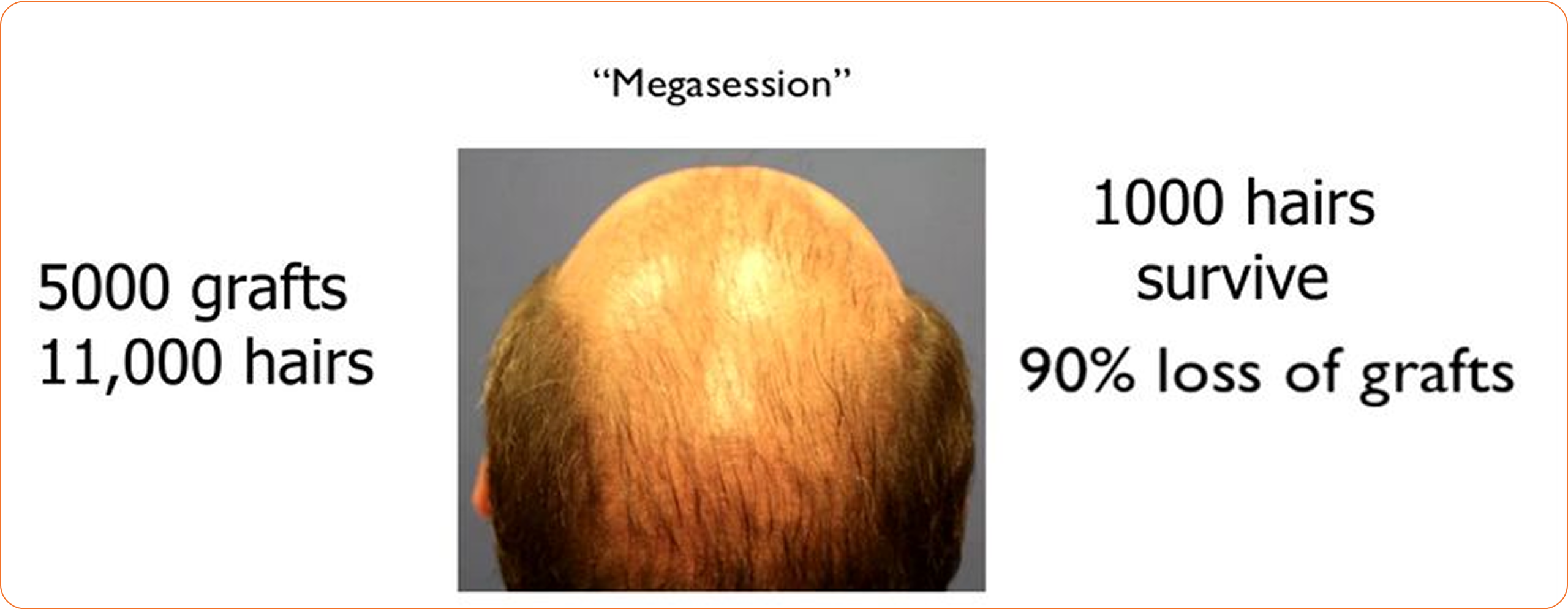
Beware of hair transplant clinics promising any more than 3000 grafts per session. Graft, implant, and density numbers can be skewed when survival of grafts are not taken into account.
How TrichoStem® Hair Regeneration Improves Hair Transplants
How TrichoStem®
Hair Regeneration Improves
Hair Transplants


TrichoStem® Hair Regeneration with its two wound healing materials (PRP+ECM) is used after hair transplant surgery (FUT) to heal the donor strip for a natural appearance and to restore donor hair.

- If native hair is left untreated, they can be lost years after a hair transplant, leaving behind on the transplanted hairs. This results in visible hair plugs
.png)
- If native hair is left untreated, they can be lost years after a hair transplant, leaving behind on the transplanted hairs. This results in visible hair plugs
Managing Further Hair Loss
Managing Further Hair Loss
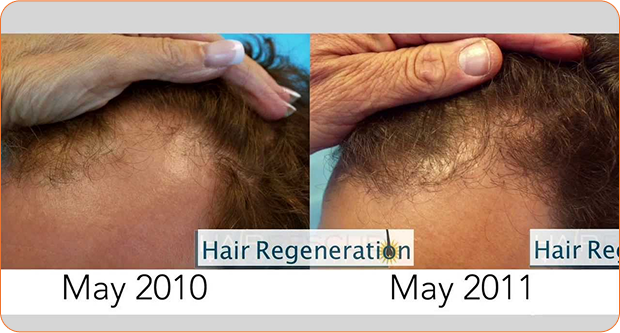
While hair transplants have many limitations, their inability to not treat progressive hair loss is the greatest of them all, and also the most overlooked. People assume hair transplants as a solution for hair loss, but transplants cannot stop hair loss from continuing. Hair loss occurs slowly as DHT-sensitive hair follicles grow thinner with each hair growth cycle until they disappear completely. TrichoStem® Hair Regeneration reverses this hair thinning process by enabling hair to grow progressively thicker. TrichoStem® Hair Regeneration achieves this through by increasing the production of your own adult stem cells to reactivate hair growth at the roots of hair follicles (the dermal papillae).

.png)
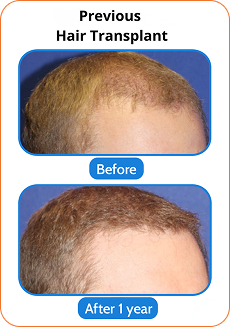
Thinning hair transplanted or native hair provide sparse coverage that can be lost with time. TrichoStem® Hair Regeneration after a previous hair transplant thickens both native, and transplanted hair for
denser coverage.
Thinning hair transplanted or native hair provide sparse coverage that can be lost with time. TrichoStem® Hair Regeneration after a previous hair transplant thickens both native, and transplanted hair for denser coverage.
Contact Us
Oops! Something went wrong while submitting the form.
Explore Our Locations






.svg)
.svg)


.avif)




%201.png)






FOLLOW US

.svg)
.svg)
.svg)